
Can You Contribute More Than 12% of Your Salary to PF? Understanding VPF, Tax Benefits and Interest
Most salaried employees in India know that 12% of their Basic Salary plus Dearness Allowance (DA) is deducted towards the Employees' Provident Fund (EPF). However, many employees are unaware that they can voluntarily contribute more than this amount to build a larger retirement corpus.
This additional contribution is known as Voluntary Provident Fund (VPF).
VPF is an option for employees who want to increase their long-term savings through their existing Provident Fund account. It can be particularly useful for individuals who prefer disciplined savings and relatively predictable, government-administered retirement investments.
1. Can You Contribute More Than 12% to PF?
Yes. An employee can voluntarily contribute more than the standard 12% of Basic Salary plus DA through VPF.
For example, if your monthly Basic Salary plus DA is ₹50,000:
| Particulars | Contribution |
|---|---|
| Basic Salary + DA | ₹50,000 |
| Standard employee PF (12%) | ₹6,000 |
| Additional VPF contribution (8%) | ₹4,000 |
| Total employee contribution (20%) | ₹10,000 |
In this example, your monthly PF contribution increases from ₹6,000 to ₹10,000. The additional ₹4,000 goes towards your retirement savings.
2. What Is Voluntary Provident Fund (VPF)?
VPF is an extension of the employee's contribution to the existing EPF account. It allows employees to save more without opening a separate investment account.
- VPF is an additional contribution made by the employee.
- It earns interest at the applicable EPF interest rate.
- The employer is not generally required to match the additional VPF contribution.
- The contribution is deposited into the employee's Provident Fund account.
- Employees should coordinate with their HR or payroll department to increase their contribution.
3. What Is the Current PF Interest Rate?
For the financial year 2025–26, the EPFO interest rate is 8.25% per annum.
This rate applies to eligible EPF accumulations, including voluntary employee contributions. However, the interest rate is reviewed periodically, so employees should not assume that the same rate will continue in future financial years.
4. Tax Implications of Additional PF Contributions
Although VPF is a retirement savings option, higher contributions can have tax implications.
Interest Taxation Threshold
Under the applicable income-tax provisions, interest attributable to employee contributions exceeding the following annual limits becomes taxable:
- ₹2.5 lakh per financial year: When the employer also contributes to the fund.
- ₹5 lakh per financial year: When there is no employer contribution to the fund.
These limits apply to the employee's aggregate contributions to the relevant provident fund accounts, not just the additional VPF amount.
Crossing these limits does not make the entire PF interest taxable. Only the interest attributable to excess contributions is taxable under the applicable rules.
Tax Deduction Under Section 80C
Employee PF and VPF contributions may qualify for deduction under Section 80C, subject to the overall ₹1.5 lakh limit and applicable tax-regime conditions.
Under the new tax regime, deductions under Section 80C are generally not available. Therefore, employees should consider their chosen tax regime before increasing contributions purely for tax-saving purposes.
5. Example: How Much Can You Accumulate Through VPF?
Suppose an employee decides to contribute an additional ₹5,000 every month through VPF.
| Period | Additional Contribution |
|---|---|
| Monthly | ₹5,000 |
| Annually | ₹60,000 |
| 5 Years | ₹3,00,000 |
| 10 Years | ₹6,00,000 |
| 15 Years | ₹9,00,000 |
The above figures represent contributions only, excluding interest. At an illustrative annual interest rate of 8.25%, the accumulated amount would be significantly higher due to compounding. Actual returns will depend on applicable annual interest rates, contribution dates and EPFO interest calculation rules.
6. Is VPF Better Than Investing in Mutual Funds or Stocks?
The answer depends on your financial goals, investment horizon and risk appetite. VPF and market-linked investments serve different purposes.
| Parameter | VPF | Equity Mutual Funds |
|---|---|---|
| Risk | Relatively low | Market-linked |
| Returns | Government-declared interest | Market-dependent |
| Capital protection | Subject to applicable EPF framework | No guaranteed protection |
| Liquidity | Restricted withdrawal rules | Generally more flexible |
| Tax treatment | Subject to PF tax rules | Depends on fund and holding period |
| Investment objective | Retirement savings | Wealth creation |
VPF can be useful for building a stable retirement savings component, while equity mutual funds and stocks can provide exposure to long-term market growth.
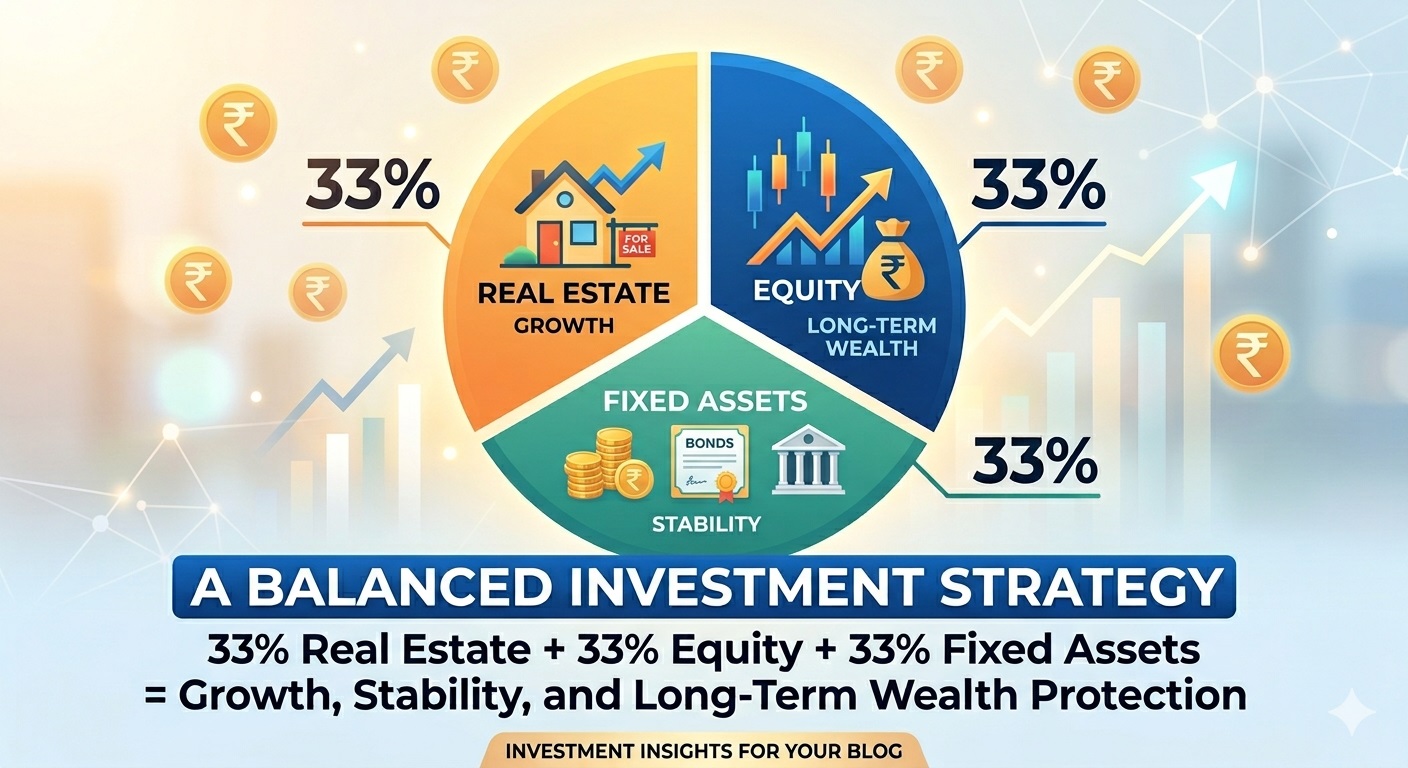
A balanced financial plan should consider both stability and growth rather than depending entirely on one investment category.
7. Should You Increase Your PF Contribution?
Before increasing your VPF contribution, consider the following:
- Maintain sufficient emergency savings.
- Clear high-interest loans and credit card dues.
- Understand the tax implications of additional contributions.
- Consider your retirement age and investment horizon.
- Maintain a balance between fixed-income and market-linked investments.
- Check the withdrawal conditions before committing additional money.
Remember that money deposited into PF is intended primarily for long-term retirement savings. It should not be treated as an easily accessible emergency fund.
8. Final Thoughts
The option to contribute more than 12% towards PF provides salaried employees with an additional opportunity to build retirement wealth.
However, increasing your VPF contribution should be a planned financial decision rather than simply increasing deductions from your monthly salary.
Your investment strategy should consider your income, expenses, emergency fund, existing investments, retirement goals and tax position.
At Foliux, we believe that better financial decisions come from tracking every investment, understanding its tax impact and maintaining the right balance between different asset classes.
Instead of investing everything in one category, build a diversified portfolio that supports both your short-term financial requirements and long-term wealth creation.
Frequently Asked Questions (FAQs)
Q1. Can I contribute 20% or 30% of my Basic Salary towards PF?
Yes. Employees can opt for a higher voluntary contribution, subject to applicable EPF rules and payroll arrangements.
Q2. Does my employer also have to contribute the same additional amount?
No. The employer is generally not required to match the additional VPF contribution.
Q3. Does VPF earn the same interest as EPF?
Yes. VPF contributions earn interest at the applicable EPF rate.
Q4. Is VPF interest completely tax-free?
Not necessarily. Interest attributable to employee contributions exceeding ₹2.5 lakh annually, or ₹5 lakh where there is no employer contribution, is taxable under the applicable provisions.
Q5. Can I withdraw my VPF amount whenever I want?
No. VPF is part of the EPF account and is governed by applicable EPF withdrawal and advance rules.
Q6. Is VPF a good alternative to mutual funds?
VPF is suitable for retirement-focused savings, while mutual funds offer market-linked growth opportunities. Both can have a place in a diversified financial plan.
Important Disclaimer
This article is for educational and informational purposes only. Interest rates, tax provisions and withdrawal conditions may change. Readers should verify the latest EPFO and Income Tax Department guidelines before making financial decisions.
Reference Sources
- EPFO – Official Website and FAQs
- Income Tax Department – Provident Fund Tax Treatment
- Press Information Bureau – Government Announcements
Published by Foliux – Smarter Investment Tracking and Financial Planning.



No comments yet. Be the first to share your thoughts!
You must be logged in to write a comment.
Log In to Comment