What RBI’s ₹2.87 Lakh Crore Dividend Means for the Indian Stock Market in 2026
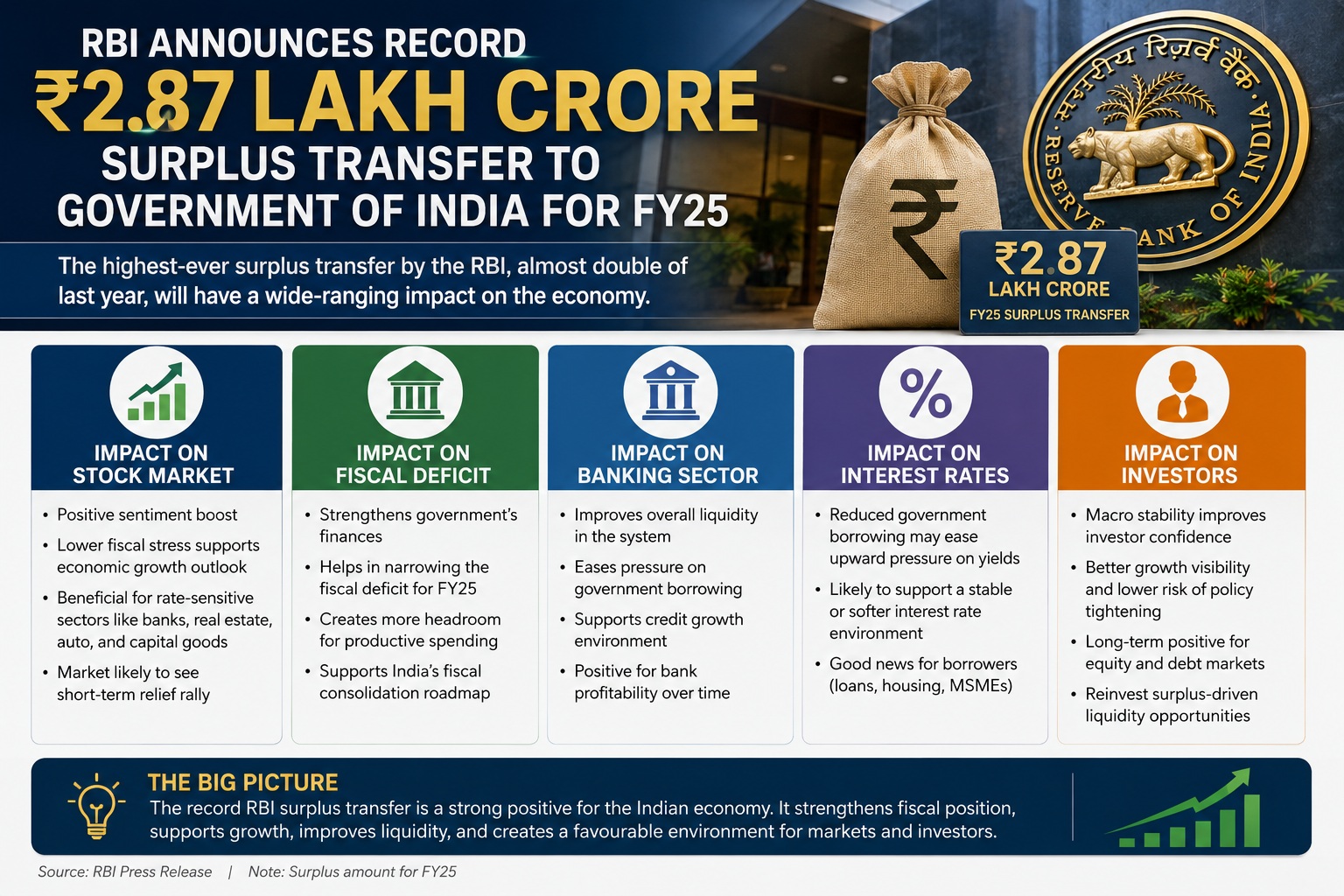
The Reserve Bank of India (RBI) has announced a historic surplus transfer of ₹2.87 lakh crore to the Government of India for FY26. This is the highest-ever dividend payout by the central bank and has created significant buzz in the Indian stock market.
But what does this really mean for investors, traders, and the broader economy? Let’s break it down in simple terms.
What is RBI’s Surplus Transfer?
Every year, the RBI earns income through:
- Interest on government bonds
- Foreign exchange reserves management
- Currency operations
- Liquidity and banking operations
After keeping some money aside for risk provisions and reserves, the remaining profit is transferred to the Government of India. This process follows the framework recommended by the Bimal Jalan Committee.
RBI Dividend History
| Financial Year | Dividend Amount |
|---|---|
| FY26 | ₹2.87 lakh crore |
| FY24 | ₹2.11 lakh crore |
| FY23 | ₹87,416 crore |
Why is This Important for the Share Market?
A higher RBI dividend is generally considered positive for the Indian stock market. Here’s why:
1. Lower Fiscal Deficit Pressure
The government receives extra money without increasing taxes or borrowing heavily. This helps reduce the fiscal deficit and improves overall economic stability.
2. More Government Spending
With additional funds, the government can increase spending on:
- Infrastructure projects
- Railways and roads
- Capital expenditure
- Welfare schemes
This can boost sectors like:
- Infrastructure stocks
- Cement companies
- Capital goods
- PSU banks
3. Positive Sentiment for Banking Stocks
The banking and financial sectors usually react positively because better government finances improve liquidity and confidence in the economy.
4. Possibility of Lower Bond Yields
If government borrowing reduces, bond yields may soften. Lower yields are often positive for equities, especially growth and rate-sensitive sectors.
Which Sectors May Benefit?
- Banking: SBI, Bank of Baroda, PSU Banks
- Infrastructure: L&T, IRCON, NBCC
- Capital Goods: Siemens, ABB India
- Construction & Cement: UltraTech Cement, ACC
What Should Investors Watch?
While the RBI dividend is a positive macroeconomic signal, investors should also monitor:
- Inflation trends
- Interest rate decisions
- Global market conditions
- Government spending execution
A single announcement does not guarantee a market rally, but it strengthens confidence in India’s economic position.
Final Thoughts
The RBI’s record ₹2.87 lakh crore surplus transfer is a major boost for the Indian economy and stock market sentiment. It provides the government with additional financial flexibility, supports economic growth, and may reduce borrowing pressure.
For long-term investors, this development signals continued macroeconomic strength and could create opportunities in banking, infrastructure, and capital expenditure-driven sectors.